Shopify

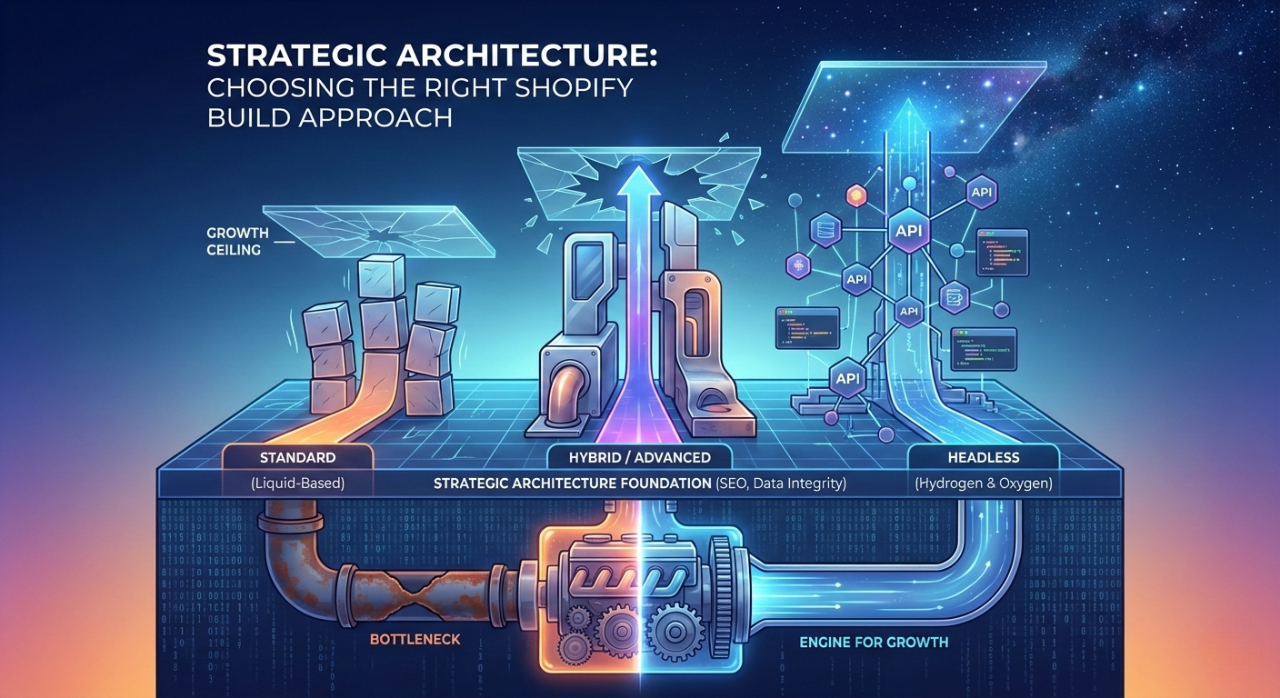
Strategic Architecture: Choosing the Right Shopify Build Approach

Is your current Shopify setup a engine for growth, or a bottleneck?

M any brands migrate to Shopify with high expectations.1 They bring premium products, polished branding, and aggressive marketing budgets—yet the needle fails to move.

After overseeing dozens of high-scale Shopify deployments, we’ve identified a recurring pattern:

Underperforming stores rarely fail because of the product. They fail because of architectural misalignment.

Modern Shopify is no longer a “one-size-fits-all” template engine. It is a multi-layered ecosystem. Choosing the wrong build path doesn’t just create technical debt; it creates a “growth ceiling” that stifles SEO, compromises data integrity, and limits conversion potential.

The Three Pillars of Shopify Architecture

Shopify currently supports three primary methodologies. Selecting the right one is a balance of speed, cost, and long-term vision.

1

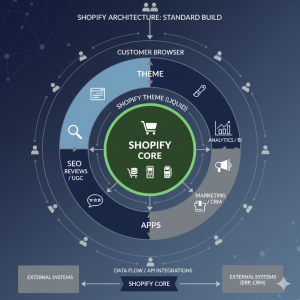
Standard Shopify (Liquid-Based Themes)

This setup utilizes Shopify’s proprietary templating language, Liquid.2 It relies on the robust theme ecosystem and plug-and-play apps.

  • Best For: Emerging brands, rapid MVP launches, and teams who want to manage their store without a permanent developer on speed-dial.
  • The Reality: It is incredibly fast to market, but performance often degrades as you stack "app-based" solutions for features that should have been native.
2

Hybrid / Advanced Builds

A Hybrid build keeps Liquid at the core but replaces "heavy" apps with custom-coded components. It optimizes the critical path of the user journey without abandoning the convenience of the Shopify admin.

  • Best For: Scaling DTC brands that have outgrown basic themes and need a competitive edge in speed and UX without the "Enterprise" price tag of Headless.
  • The Reality: This is often the highest ROI path. You get 90% of the performance of a custom site with 10% of the technical overhead.
3

Headless Shopify (Hydrogen & Oxygen)

Headless decouples the "Head" (the part customers see) from the "Body" (the Shopify backend).3 Your storefront is a custom-built React application communicating with Shopify via APIs.
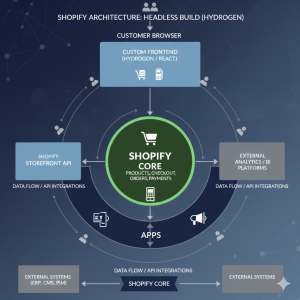
  • Best For: Complex global brands, businesses with deep tech stacks (ERP/PIM), or those requiring a completely non-linear shopping experience.
  • The Reality: It offers total creative freedom but requires a dedicated engineering team.4 It is a powerful tool, not a magic wand for sales.
Comparison Framework: At a Glance

Strategic Criteria Standard Liquid Hybrid / Advanced Headless (Hydrogen)

Speed to Market

Ultra-Fast
Moderate
Deliberate

Capital Investment

Low
Balanced
High

UX Flexibility

Template-Bound
Template-Bound
High

SEO Complexity

Built-in
Optimized
Engineered

Maintenance

Low
Moderate
Ongoing

The "Silent" Growth Blockers: SEO & Analytics

We often hear:

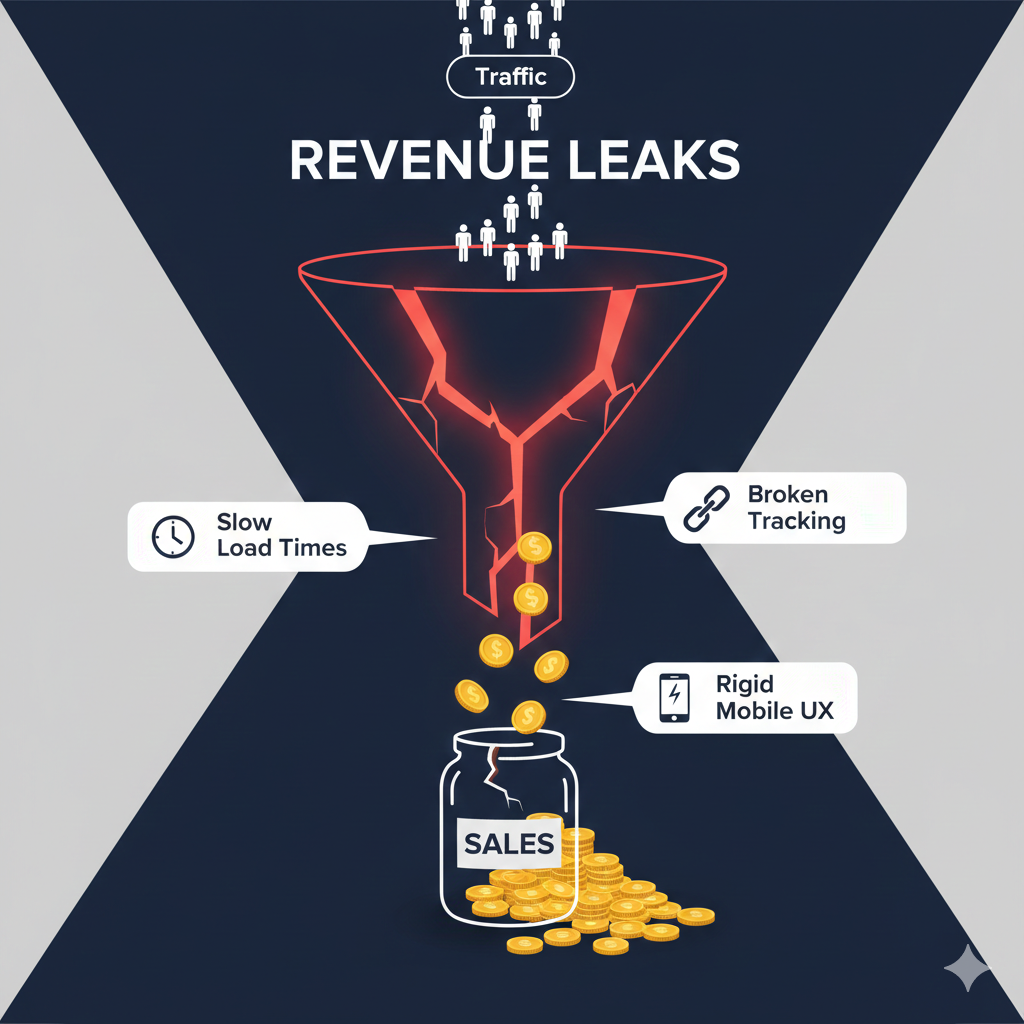
The traffic is there, but the revenue isn’t.

When a build is rushed, two critical areas are usually treated as afterthoughts. In a professional build, these are baked into the architecture, not “bolted on” at the end.

Technical SEO is the Floor, Not the Ceiling

Search engines don’t just read your content; they judge your infrastructure. A poor build results in:

  • Bloated Code: Excessive apps slowing down “Time to Interactive.”5
  • Crawl Inefficiency: Poor URL structures and duplicate content loops.6

Unstable Vitals: Layout shifts that frustrate both users and Google’s ranking algorithms.

Data Integrity & Conversion Tracking

In the era of privacy-first browsing (iOS14+), basic tracking is no longer enough. Professional builds prioritize Server-Side Tracking. Without accurate attribution, you are effectively gambling with your ad spend. Your architecture must ensure that what happens in the browser is accurately reflected in your BI tools.

Strategic Checklist: Before You Commit

Before deciding on your build path, your leadership team should answer:

Final Insights

Shopify is a world-class engine, but even a Ferrari underperforms if the chassis is misaligned.7

The goal isn’t to have the most complex technology; it’s to have the most appropriate technology for your current stage of growth. Built intentionally, your Shopify store is an asset that scales. Built haphazardly, it is a liability that quietly limits your potential.

Share Now: